Last updated November 22, 2026
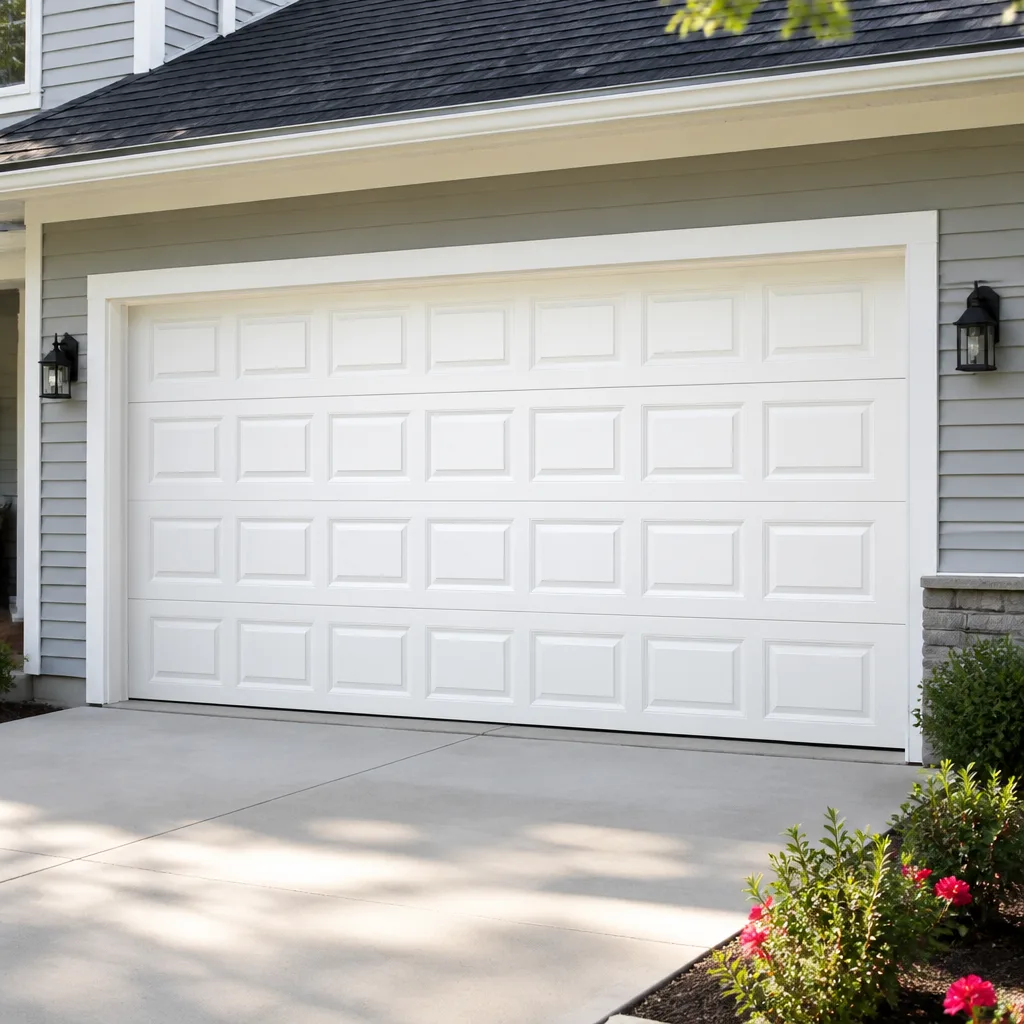 Raised-panel steel
 Carriage house
 Modern flush
 Full-view glass
 LiftMaster openers
 Chamberlain openers
Full 25-point door and opener safety check with every visit - springs, cables, rollers, tracks, and your LiftMaster or Chamberlain opener included
You get a price before we start. It does not change when the pro arrives.
Get your free estimateDIY vs Professional Garage Door: The Quincy Homeowner’s Decision Guide
Most homeowners think the DIY versus professional question is about skill. It isn’t. A torsion spring stores enough energy to cause permanent injury in less than a second, and no amount of tutorial watching changes that physics. But replacing a bottom seal, swapping a roller, or reprogramming a LiftMaster opener? Those are legitimate weekend tasks, and plenty of Quincy homeowners handle them well. The mistake is never knowing which category you’re standing in before you pick up a tool. This guide sorts every common garage door job into three buckets: safe to do yourself, possible but genuinely risky, and technician-only, with the mechanical reason behind each call. You’ll also see what a DIY attempt actually costs once you count tools and time, and why a phone call to a Quincy specialist is often the cheaper move.
Quick Answer
Anything that touches torsion springs, cables, or the door’s balance is technician-only work, full stop. Seals, weatherstripping, rollers, lubrication, remote programming, and light hardware tightening are reasonable DIY jobs if you’re comfortable on a ladder. Everything in between, from opener logic boards to panel replacement, is where we’d rather you call, because the wrong first step can turn a small repair into a full door replacement. When you want a straight diagnosis instead of a guess, Quincy Garage Door Repair Pros is who Quincy homeowners call.
Styles & brands we work with
- Raised-panel steel
- Carriage house
- Modern flush
- Full-view glass
- LiftMaster openers
- Chamberlain openers
Table of Contents
- Why Garage Door Work Is a Different Kind of DIY
- Task-by-Task: What’s Safe, What’s Risky, What’s Off-Limits
- The Real Cost of DIY vs Professional in Quincy
- The Warranty Scenario DIY Guides Never Mention
- What a YouTube Tutorial Actually Prepares You For
- Already Tried It? How to Describe the Problem to a Technician
- What’s Specific to Quincy Homes and Garage Doors
- How to Choose a Garage Door Professional
Why Garage Door Work Is a Different Kind of DIY
Your garage door is the largest moving object in your house, and it hangs from a spring system that holds the whole weight of the door under constant tension. That tension is the entire point. It’s also why a garage door isn’t like a deck repair or a faucet swap. The system is manufactured to be both easy for a trained hand to work on and unforgiving to a mistake in sequence.
Contrast it with a task like painting. If you paint a door and get a run, you sand it out. If you take a torsion spring off its wind, you can be badly hurt before you register what happened. That’s not scaremongering. It’s the nature of stored mechanical energy. We work on these systems every week, and even our technicians treat spring work as the small handful of jobs where slowdown, not speed, is the operating rule.
The good news: the risk is concentrated, not spread across the whole door. That’s what makes the DIY versus pro question answerable task by task, and it’s what most generic guides skip. Here’s the shape of it.
The three mechanical zones of any garage door
- Zone 1 – Low-tension hardware. Bottom seal, weatherstripping, hinges, rollers, and the bolted hardware on the door face. Extra weight and a little care, but no stored energy you can’t see.
- Zone 2 – The balance system. Torsion or extension springs, cables, drums, and safety cables. This is high-energy, high-consequence work, and it’s the zone that decides whether you call a professional.
- Zone 3 – Control and drive. Opener, safety sensors, limit switches, logic boards, remotes. Mostly electrical and electronic, mostly within reach of a careful homeowner, and improvable with a trained diagnosis when the door behaves oddly.
Once you know which zone a job lives in, the decision guide writes itself. So let’s walk the tasks one by one.
Task-by-Task: What’s Safe, What’s Risky, What’s Off-Limits
Here’s the classification we give homeowners on the phone, and the mechanical reason behind each call. If you only read one section of this guide, make it this one.
Safe DIY jobs (Zone 1 and easy Zone 3)
- Bottom seal replacement. The seal slides into the bottom of the door and has no tension on it. It’s a two-hand job with a screwdriver and the right replacement seal for your door width. Twenty minutes, and the seal protects your Quincy garage from snowmelt and rain that finds its way under the door.
- Weatherstripping on jambs and top. Same category: rubber on a track, no tension, no injury risk. If the gap around your door lets daylight in, the strip has compressed over the years.
- Roller inspection and replacement. Rollers ride in the vertical and horizontal tracks and are only under the weight of the door. Buy the right size, replace one at a time, and let the door rest in its closed position.
- Lubrication. A garage door needs lubricant on the hinges, rollers, and pivot points. A silicone or lithium grease on the tracks isn’t needed – tracks stay clean and dry, while the moving parts get a coat. Ten minutes of upkeep, and it’s the single most common cause of a door that shrieks or runs rough.
- Remote and keypad programming. Every LiftMaster and Chamberlain unit ships with a documented programming method. Follow it exactly and you can pair a remote or reset a keypad without a call.
- Light hardware tightening. Loose bracket bolts on the door face or the track are a socket-set job. Check them with the door down, and never over-tighten a hinge or you’ll distort the panel.
- Photo-eye alignment. The safety sensors near the floor stall a door that can’t see. Straighten the brackets, clean the sensors, and you’ve fixed a common “door won’t close” call in five minutes.
DIY-possible-with-risk (Zone 2, but borderline)
- Extension spring replacement. We’d rather you didn’t, but extension springs are more forgiving to work on than torsion – one side at a time, with the door fully closed. A wrong step on a wound spring is still a serious hazard, and a novice can’t reliably judge an old, stretched spring on sight.
- Panel replacement. You can source a matching panel from a brand like Clopay and swap it yourself if the door sits calm and balanced. Getting the panel to seat in the hinges and align with the neighboring panels is harder than it looks and easy to guess wrong on, and if the door’s balance shifts you’ll need a technician anyway.
- Opener logic board swap. Boards come with connectors and a documented sequence. Fine if you’re methodical with the power off, less fine if a connector is at fault and you can’t tell. Opening the case also voids the unit’s warranty.
- Balance testing. This isn’t repair, it’s diagnosis, and it’s something you can do safely. Pull the manual release, lift the door halfway, and let go. A properly balanced door stays put with a light pull. A door that sinks or flies tells you the springs are the problem, so you call knowing what’s wrong.
Technician-only (Zone 2)
- Torsion spring repair. The torsion spring is wound to carry the door’s weight and stores energy you can’t put back after a mistake. This is the top of the risk list, and it’s why garage door spring repair is a named service with us, not a job handed to a generalist. A garage door repair visit here starts with a spring inspection, every time.
- Cable replacement and drum work. The cables carry the spring tension to the door and hold it in a straight line. A cable that’s been re-done at an angle, or a drum that’s slipped, can throw the door out of level and bind the tracks in seconds.
- Track replacement and realignment. Bent tracks need to be replaced, not beaten back, because a wrong bend ruins the geometry the door depends on.
- Springs on a heavy or high-lift door. Standard residential spring work is dangerous enough. A reinforced door or a high-lift track configuration makes the precision worse.
- Anything that has already failed once. If a repair you attempted didn’t hold, the next step should be a professional, because the failure mode is now a variable.
The dividing line is simple: if the spring or cable system is carrying stored energy you’d have to release to work on it, call a professional. If it’s a seal, a roller, or a remote, it’s yours.
The Real Cost of DIY vs Professional in Quincy
Homeowners ask us this one directly, so let’s be honest about the numbers. DIY only wins on cost when the tool purchase is a one-time thing and the job doesn’t recur. On a single seal swap, it does. On anything spring or cable related, the math changes fast.
What the DIY option actually costs
- Bottom seal replacement: seal stock is cheap; the tool is a screwdriver you already own. Time: about an hour including cleanup.
- Roller replacement: a set of rollers and a socket set. Time: one to two hours for a ten-roller door.
- Lubrication: a can of grease and a rag. Time: fifteen minutes.
- Extension spring: a pair of springs, and the labor and time of two to three hours if nothing goes wrong, with the risk of an injury that can turn a two-hour job into a longer recovery.
- Opener board: the board cost plus diagnostic time. If the board wasn’t the fault, the money is gone.
What the professional route buys
- Diagnosis on the first visit. A technician identifies what’s actually broken instead of replacing parts until the symptom clears.
- Correct parts for your brand. A Genie opener and a LiftMaster opener aren’t interchangeable, and a generic part usually fits neither perfectly. We work on the exact system in your garage.
- A quoted price before work starts. You get the number in writing before anything comes apart, and the written estimate sets the final price. No bill larger than the quote.
- Spring work done safely. Two springs on a matched pair are replaced together, and that’s the standard – a pair costs about twice the single-spring rate.
- Free estimates. Our estimates in Quincy are free, which means the diagnostic visit costs you nothing but the phone call.
Typical Quincy price ranges for the jobs that most often go wrong
- Torsion spring repair: typical range runs roughly $180 to $340 for a single spring, and a matched pair is about twice that because they’re replaced together.
- Opener repair: usually in the $150 to $350 range for repair work, with the price set by the diagnosis and the parts needed.
- New opener installation: the full install runs higher than a repair, and the written quote covers the unit and labor together.
- New garage door installation: priced per door and door style, measured first.
These are estimates, and a written quote on site sets the final price. Call for an exact figure because only a visit and measure can produce it.
The Warranty Scenario DIY Guides Never Mention
Here’s the scenario that surprises homeowners most. Your door or opener is still under the manufacturer’s warranty, and you open the case to troubleshoot a Genie opener that’s been unreliable, or you replace a spring on a door covered by its maker. The warranty may already have been voided before you knew it existed. It’s rarely the repair that voids it – it’s the hands that did the work, because the manufacturer’s coverage typically assumes installation and repair by a qualified professional.
That’s a real reason to check before you start. Most homeowners never do. Our advice:
- Find the paperwork or the unit’s label and confirm the warranty period is still active.
- Read the exclusions before any work. If the door or opener is under coverage, don’t open the case and don’t touch the spring or cable system.
- Let a professional handle the repair so the warranty stays intact, and ask for the diagnosis documented.
Opener brands in particular are strict on the reasoning: a control board swap by an unqualified hand can void coverage on the whole unit. If your door is a Clopay or Amarr panel still under coverage, the same logic applies.
What a YouTube Tutorial Actually Prepares You For
A good tutorial is a real resource, and we don’t dismiss it. It teaches you the names of the parts, the order of the screws, and what a healthy door sounds like. On a seal or a roller video, that’s a genuinely helpful start.
Here’s what it misses. A tutorial shows you a spring wound neatly on a clean bench, not the state of your spring after a decade of Quincy winters. It shows a tidy sequence with the risk edited out, and it can’t tell you how much energy is still stored in a half-turned spring when you first reach for it. The tension, in a word, is invisible. It’s also the whole risk. A person watching a video can learn the sequence and not be able to feel or eyeball a spring that’s still loaded.
The tutorial also can’t see the surrounding damage. A snapped spring often takes a cable, a drum, or a track with it, and an unqualified eye sees a snapped spring while a trained one sees what’ll fail next. That’s the real gap: not hand skill, diagnosis.
The sweet spot is to use tutorials to understand your system and then let a specialist do anything that releases tension. Swap a roller yourself. Let garage door opener repair go to a specialist who can tell a sensor issue from a motor issue, and let the balance system go to a technician.
Already Tried It? How to Describe the Problem to a Technician
Tell us plainly. We won’t judge, and it saves everyone time. A partial repair is a common starting point, and the technician can’t fix a problem without knowing what state the system is in. Here’s how to give them what they need on the phone or at the door:
- What you touched. Which parts you removed, replaced, tightened, or adjusted. Be specific – “I swapped the bottom roller” tells us more than “I messed with it.”
- What state it’s in now. Is the door locked or free, up or down, and is the emergency release pulled? That single answer tells us how urgent it is.
- What the door does. If it opens, describe the sounds and how far it moves. If it doesn’t, describe the exact moment it stops.
- What the wire looks like. Leave the sensors and opener wiring as you left them so the technician can see the state, even if you suspect it’s wrong.
- Anything you bought. Part numbers, brand, a receipt. A part that’s already paid for can often still be used.
Why does this matter? Because an honest starting state is the difference between one visit and three. A technician who knows a cable was off and put back will check the drum alignment first instead of chasing the spring. That’s the right fix, not the easy one.
What’s Specific to Quincy Homes and Garage Doors
Quincy sits south of Boston, so it’s a real winter town, not a warm-weather one. Snowbanks pile up against the door face, and the bottom seal and lower panels take the brunt. A garage door that comes up hard in January is telling you the seal has stiffened and the spring has lost a step. The same weather affects opener sensors, which fog up and report false obstructions on a cold, damp morning.
Quincy’s housing stock is older and mixed, from the triple-deckers near North Quincy to the single-family streets in Wollaston and the newer builds around Marina Bay. Older garage frames settle, which throws the track and the door’s hang slightly out of line. A door that rubs in a garage in the Wollaston or Montclair neighborhoods often gets a new seal and a roller set from a homeowner, then needs a track realignment from a technician.
None of this makes Quincy garage doors harder to live with. It does make the DIY call more specific. Weatherstripping and lubrication pay off here more than in a dry climate. Spring and track work is exactly the kind of thing you hand over.
How to Choose a Garage Door Professional
A free estimate is the baseline, and it should come with a written quote agreed before work starts. Beyond that, here’s what we’d ask any professional before you let them at your door:
- Are they a garage door specialist, or a generalist? A company that also does gutters and driveways is splitting its attention. The technicians we connect you with are licensed and insured as their state requires and work only on garage doors.
- Which brands do they know? Ask directly. If your door is a Chamberlain or your opener is a Genie, you want a pro who’s worked on that system, not one reading the manual for the first time.
- Do they give a written price before starting? Upfront pricing in writing is the single best protection against a bill bigger than the quote.
- Can they handle the whole job? From spring to opener to full installation means you’re not passing the job to a second company.
- What happens when it can’t wait? Confirm how they handle an urgent, dangerous door, because a car stuck behind a broken door is a problem that can’t always wait for the next appointment.
Our technicians have up to 13 years of experience and work on the exact system in your garage, whether that’s a LiftMaster, a Raynor, or a Wayne Dalton.
Common Mistakes to Avoid
- Starting on the spring without a second thought. It’s the most common and the most dangerous mistake. If a spring is the problem, call before you touch anything.
- Replacing one spring when the pair needs both. They wear as a set, so a new spring beside an old one usually ends with a return visit. We quote a pair alongside the single.
- Lubricating the tracks. A lot of Quincy homeowners do this and then wonder why the door slips. Tracks stay clean and dry; the rollers and hinges are where the grease belongs.
- Guessing at opener problems. Swapping a board on a hunch is an expensive way to learn that the photo-eye brackets were the issue all along.
- Forcing a door that won’t open. A door that stalls and then gets tugged is being pushed against the same problem. Stop, and let a technician diagnose it.
- Skipping the warranty check. Ruining coverage on a door that was still under warranty costs more than the repair. Read the paperwork first.
- Calling a general contractor for a spring. Garage door work needs a specialist trained in the dangerous repair, not a generalist who “also does doors.”
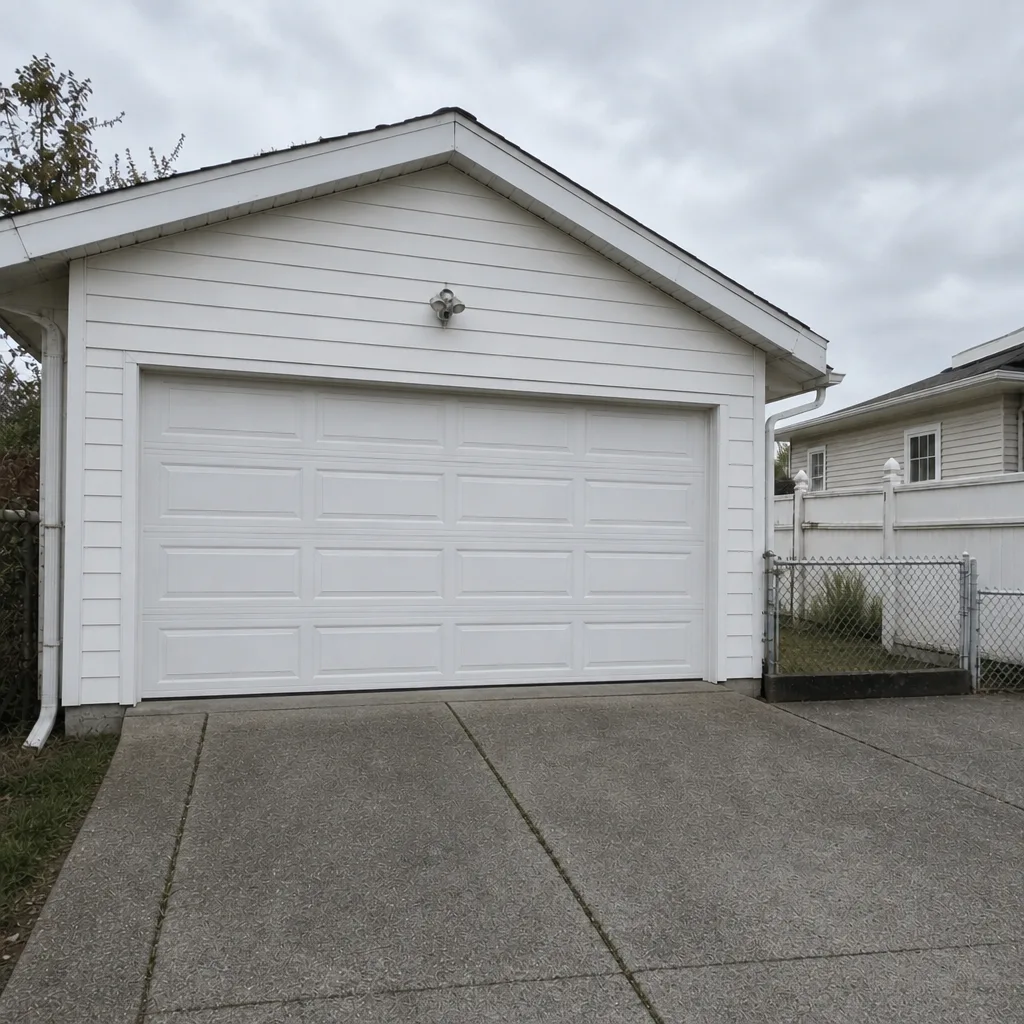
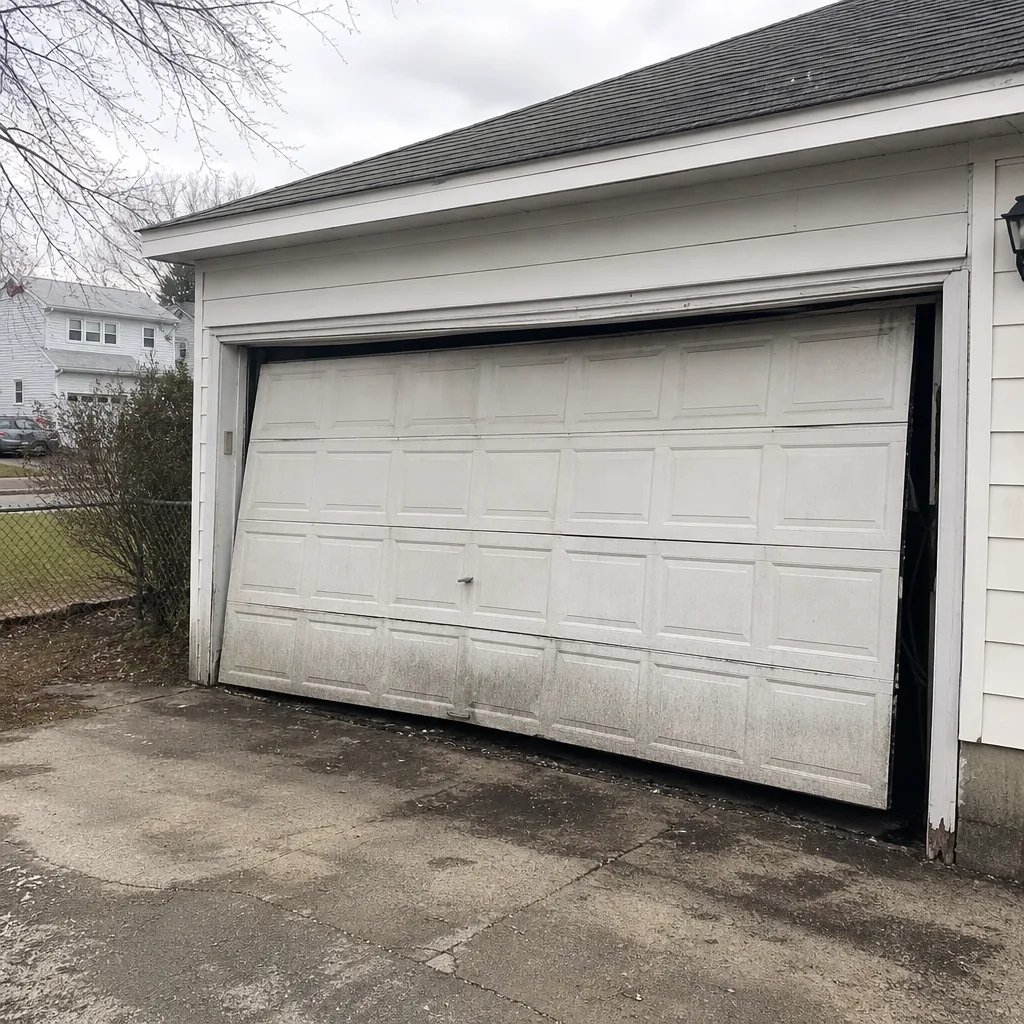
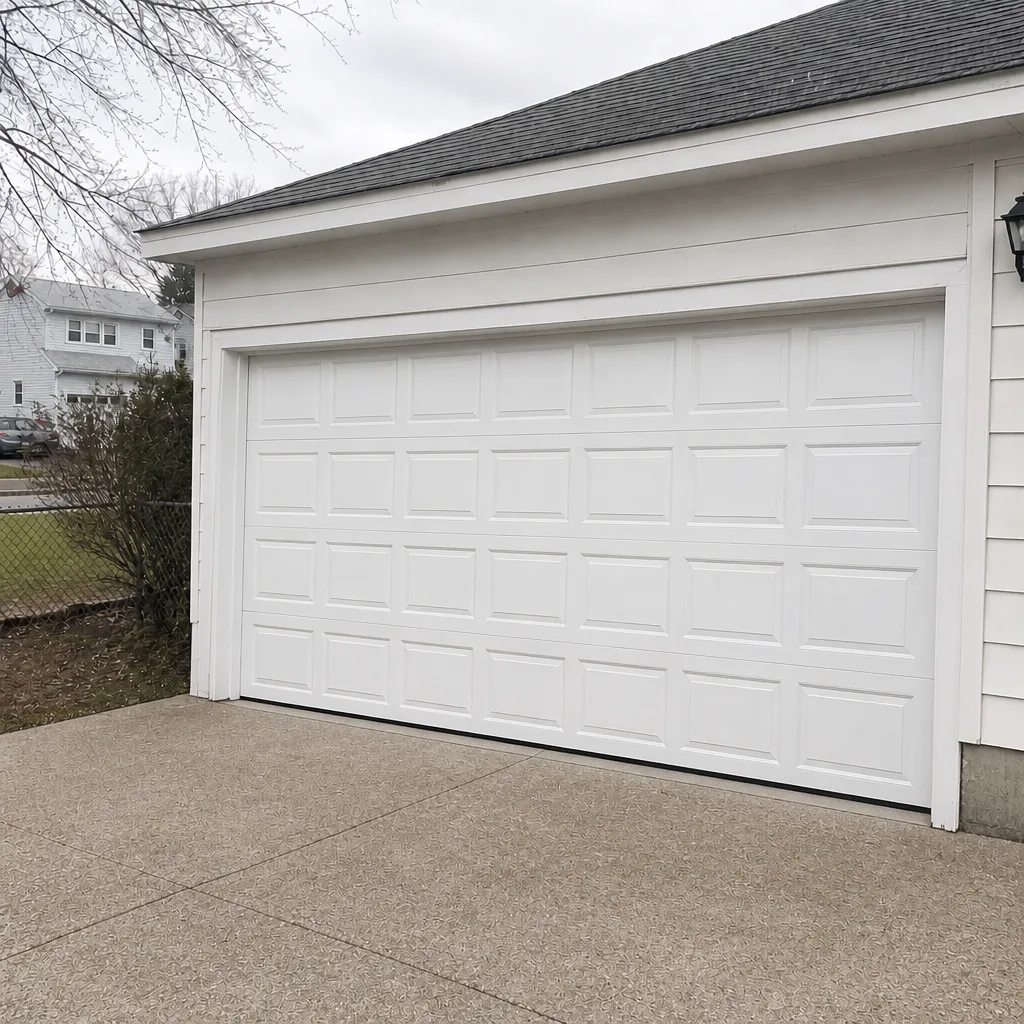
See the difference
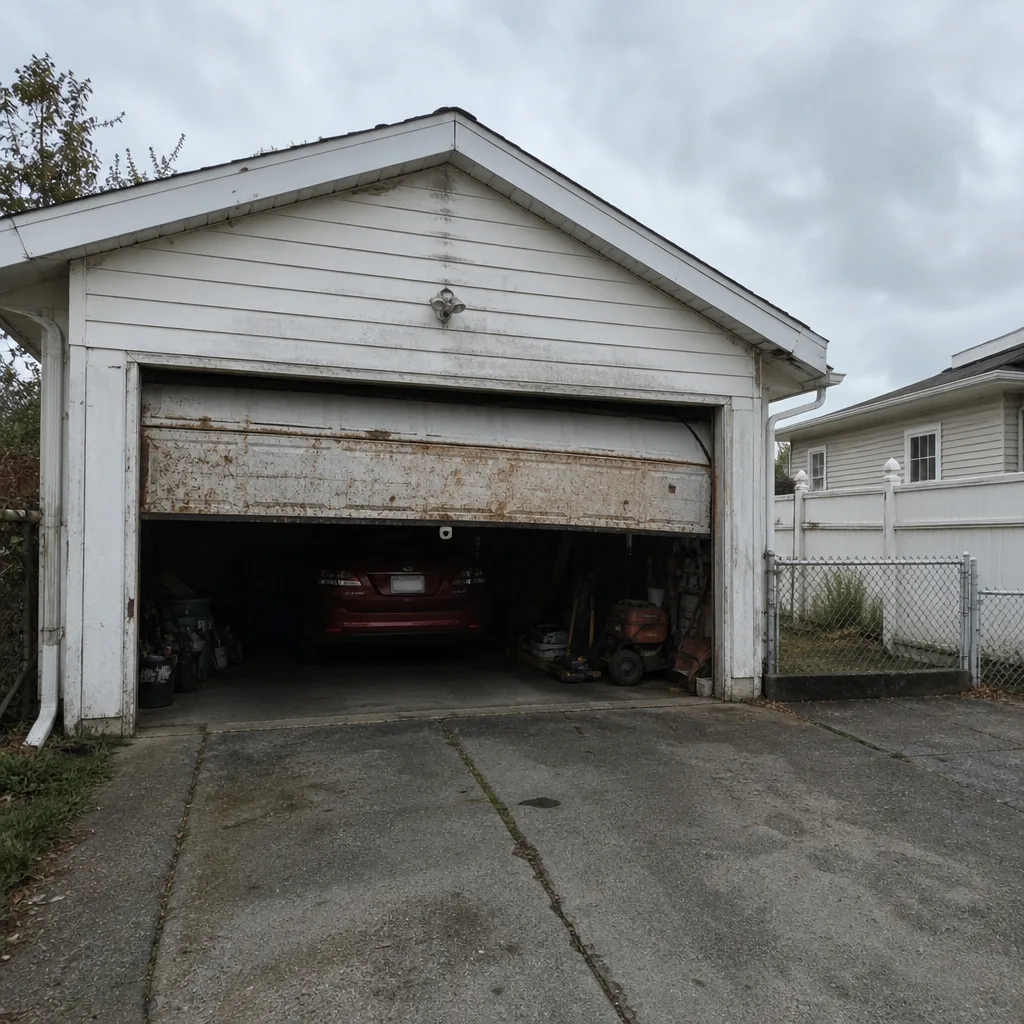 Before
 After
 Before
 After
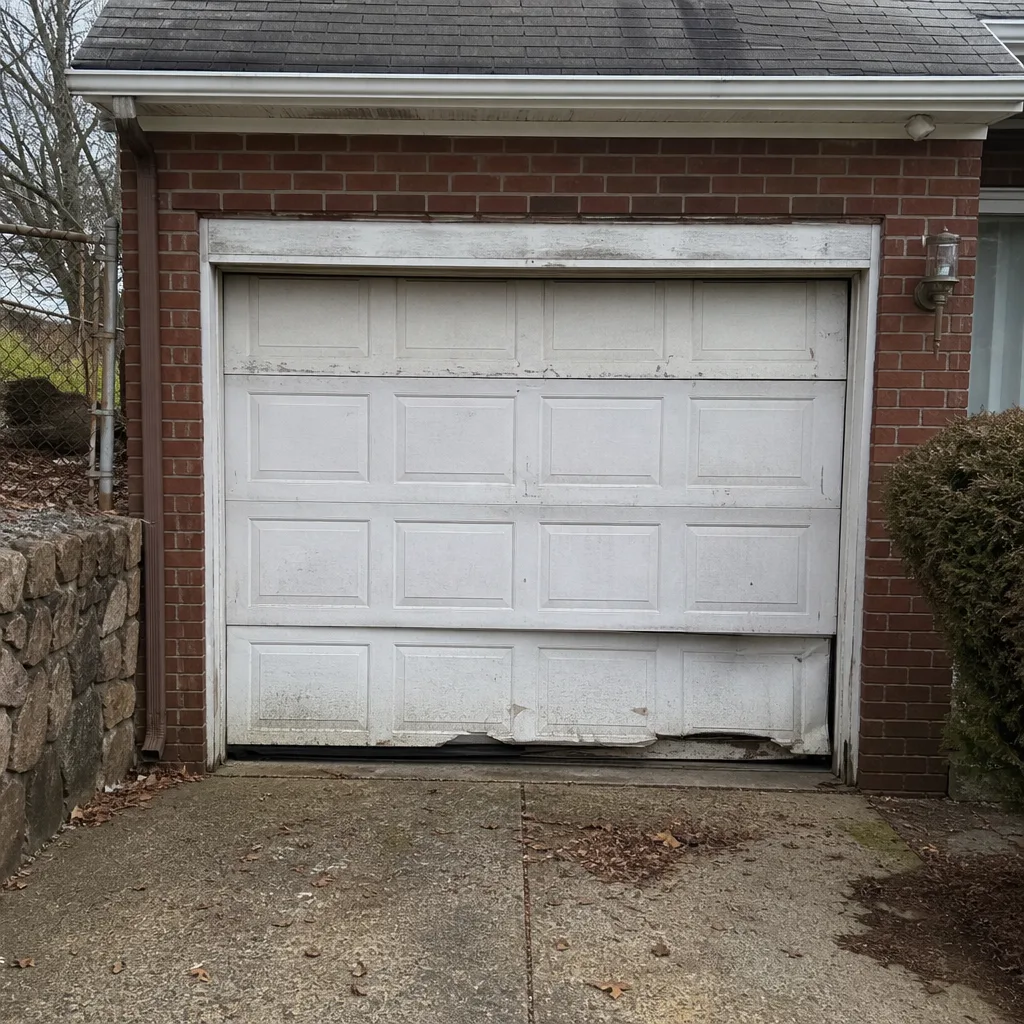 Before
 After
When to Call a Professional
Call a professional the moment the job involves a spring, a cable, a drum, a bent track, or a door that’s off its hang. Call us when the door won’t open or close and a car is stuck behind it, because a door that can’t open is both a security and a safety problem and it can’t always wait. Call if you attempted a repair and it didn’t hold, or if you noticed a crack, a stretch, or a rust line on a spring. Call if the door is under warranty and you’re not sure. Quincy Garage Door Repair Pros offers free estimates in Quincy, and our technicians work on the exact system in your garage. When it can’t wait, call us for emergency garage door service rather than booking a later appointment. The number is (866) 347-1376.
Frequently Asked Questions
No. Torsion spring replacement is technician-only work because the spring stores enough energy to cause permanent injury in under a second, and no tutorial eliminates that. Call (866) 347-1376 for a free estimate – spring repair is quoted before any work begins.
A typical single torsion spring repair runs about $180 to $340, and a matched pair is about twice that because springs are replaced together. The written estimate sets the final price, so call for an exact figure on your door – estimates are free.
It’s worth it for seals, rollers, lubrication, and remote programming, where the tool cost is low and the risk is minimal. It’s not worth it for spring, cable, or track work, because a mistake there costs more than the repair itself. When in doubt, call us for a free estimate and a straight answer.
It can. Manufacturer coverage on a door or opener typically assumes repair by a qualified professional, and opening a Genie or Chamberlain unit yourself can void coverage on the whole unit. Check the paperwork first, and if you’re unsure, call and let a technician handle it.
A broken torsion spring usually leaves the door too heavy to lift, with a visible gap in the spring coil. A door that still moves but feels wrong is more likely an adjustment or a worn spring. Don’t test it by force – call instead, and a technician will diagnose it on the first visit.
Call and we’ll tell you honestly what’s available. Emergency service in Quincy is a real service with us when the door creates a safety or security risk, so don’t assume you have to wait for a booked appointment. Call (866) 347-1376 and describe how the door failed.
The Bottom Line
The DIY versus professional question isn’t about skill. It’s about stored energy. Seals, rollers, lubrication, and remote programming are yours to do, and doing them well keeps a Quincy door quiet and weather-tight. Springs, cables, drums, and realignment belong to a trained technician, and treating them as DIY is how a small repair becomes a bigger one. Check your warranty before you touch anything, use a tutorial to understand your system rather than to release its tension, and be honest with your technician about any partial repair. When the door is beyond a seal or a roller, call us at (866) 347-1376 for a free estimate in Quincy. Our technicians have up to 13 years of experience, work on the exact system in your garage, and quote the price before any work starts.
Written by the team at Quincy Garage Door Repair Pros.